
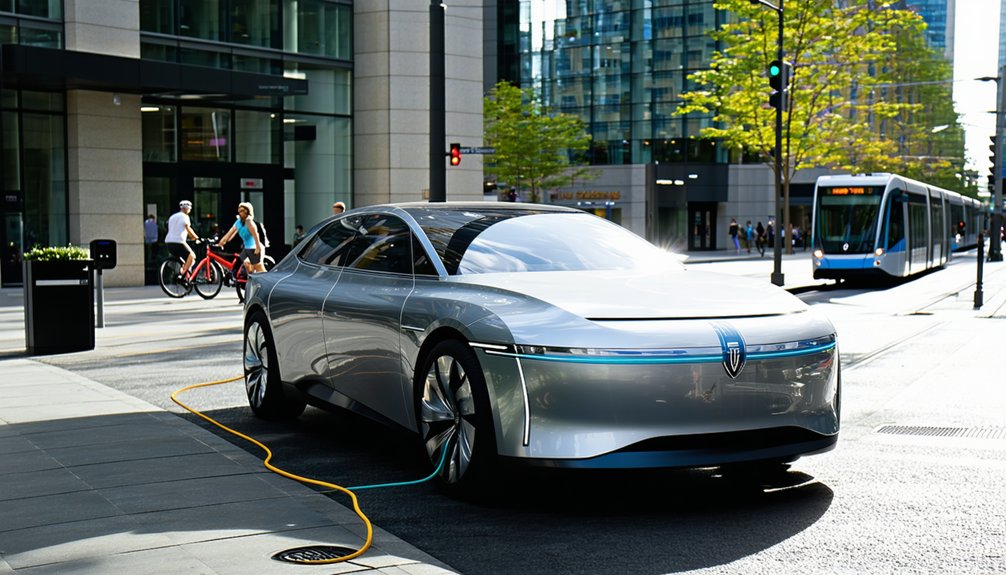

Hybrid cars cut fuel use by 30‑50 % through combined gasoline‑electric power, regenerative braking, and engine downsizing, delivering substantial cost savings and lower emissions. They retain 20‑30 % more of their original price after five years, thanks to strong resale values and battery guarantees. Refueling is as quick as conventional cars, eliminating charging hassles and range anxiety. Reliability scores are high, and market share is rising as policies and fuel costs favor efficient, plug‑in‑free solutions. Continued exploration reveals how to match a hybrid to specific commute patterns.
Key Takeaways
- Hybrids cut fuel consumption by 30‑50 % versus comparable gasoline models, delivering annual savings of $300‑$800 for typical commuters.
- Regenerative braking recovers 10‑30 % of kinetic energy in stop‑and‑go traffic, improving urban fuel efficiency by up to 11 %.
- Emissions drop 20‑30 % over the vehicle’s life, with PHEVs achieving up to 50 % lower tailpipe CO₂ when driven mostly in electric mode.
- Resale values remain 20‑30 % higher than conventional cars, often retaining 55 %+ of MSRP after five years thanks to battery warranties and market demand.
- Refueling is as quick as conventional cars, with 500‑plus mile range per tank and a nationwide network of 115,000+ gas stations eliminating charging hassles.
Hybrid Cars Save 30‑50 % on Fuel – Quick Bottom‑Line Answer
Because hybrids combine an internal‑combustion engine with an electric motor, they achieve 30‑50 % lower fuel consumption than comparable gasoline‑only models. The Ford Escape Hybrid, for example, delivers 44 mpg city and 37 mpg highway versus 28 mpg city and 34 mpg highway for its gas counterpart, translating into $754 annual savings at 15,000 mi. City savings arise from electric‑motor dominance in stop‑go traffic, where hybrids can exceed 30 % better efficiency, while highway tradeoffs remain modest but still favorable, with 33–38 mpg versus 20–28 mpg for conventional trucks. Across the segment, hybrids average 20‑35 % improved MPG, cutting yearly fuel costs by hundreds to thousands of dollars and delivering $3,000–$5,000 savings over five years, reinforcing a shared commitment to economical, responsible driving. The 2026 Corolla Hybrid LE costs about $1,375 more than its gas counterpart, but its higher MPG results in roughly $459 in annual fuel savings, a break‑even period of just over three years. Hybrid powertrains also provide regenerative braking, which captures kinetic energy during deceleration to recharge the battery. Payback time is typically reduced in stop‑and‑go suburban driving patterns.
How Regenerative Braking Cuts Urban Fuel Consumption
Hybrid cars already demonstrate sizable fuel savings, and the next leap in urban efficiency comes from regenerative braking. By capturing kinetic energy during each deceleration, urban regen converts heat‑loss into electrical charge, feeding the battery and allowing the internal‑combustion engine to shrink.
In stop‑and‑go traffic, braking optimization recovers 10‑30 % of total cycle energy, translating to a 16.1 % reduction in fuel use for parallel hybrids. Real‑world NEDC and ECE tests show 0.17‑0.229 kWh per cycle and up to 38 % of braking energy reclaimed, respectively.
These gains improve overall efficiency by 8.9‑11.2 % and extend driving range by roughly 10 %. Consequently, urban commuters experience tangible fuel cuts while feeling part of a forward‑thinking community. Intelligent power management optimizes the distribution of recovered energy between the electric motor and gasoline engine.
Why Do Emissions Drop 30‑50 % With a Hybrid Powertrain?
In urban and highway contexts, the integration of an electric motor with a conventional engine reduces total greenhouse‑gas output by 30‑50 % through three complementary mechanisms. First, the electric assist permits engine downsizing, allowing a smaller, higher‑efficiency ICE to operate at its optimal load range rather than the high‑rpm, low‑efficiency regime typical of conventional cars.
Second, regenerative braking recaptures kinetic energy, supplying the battery and cutting fuel consumption during stop‑and‑go periods.
Third, advanced thermal management keeps the engine and power‑electronics at ideal temperatures, minimizing warm‑up losses and reducing evaporative emissions.
Real‑world data show HEVs and PHEVs achieving 20‑30 % lower life‑cycle CO₂e, with PHEVs reaching up to 50 % reductions in tailpipe emissions when electric mode predominates. This coordinated strategy delivers measurable regional carbon cuts while fostering a sense of shared responsibility among drivers. PHEVs emit only 19 % less CO₂ per km on average than petrol and diesel cars. Low‑emission electricity generation further enhances these benefits. BEV life‑cycle emissions are roughly four times lower than gasoline cars.
Hybrid Car Resale Value: Keep 20‑30 % More After 5 Years
The notable emissions reductions achieved by hybrid powertrains translate into a market advantage: owners retain 20‑30 % more of a vehicle’s original price after five years compared with conventional models. Data show average 2026 vehicles keep 45 % of MSRP, yet hybrids consistently exceed 55 % residual, with Toyota and Lexus leading at 53 % and 47 % respectively. Battery longevity guarantees, such as Toyota’s 100,000‑mile coverage, reinforce confidence and drive residual premiums in the used market. Young hybrids depreciate only 22 % versus steeper EV declines, and luxury hybrids like the Lexus LX 700h hold 60‑65 % after five years. Growing consumer interest—31.5 % PHEV and 6.5 % HEV registration rises—further validates hybrids as a financially savvy, community‑endorsed choice. The used EV market is experiencing a price surge as inventory ages and rebates boost demand. Toyota’s Best Resale Value dominance underscores the strong residual performance of its hybrid lineup. Recent data show hybrids maintain 68 % of original cost after two years, highlighting their superior value retention.
No Charging Hassle – Refuel Anywhere, Forget Range Anxiety
Across the nation, drivers can pull up to any of the 115,000 plus gas stations and refuel a hybrid in the same five minutes it takes to fill a conventional car, eliminating the need for home chargers or public charging networks. This universal gas‑station access delivers urban convenience that aligns with the expectations of a community‑oriented driver, while the gasoline backup eradicates range anxiety on long hauls.
A typical hybrid exceeds 500 miles per tank, matching non‑hybrids and allowing spontaneous trip flexibility without pre‑planned charging stops. Refueling mirrors familiar gasoline procedures, requiring no plug‑in, no charger search, and no waiting period. Consequently, owners experience seamless daily use, consistent performance, and a sense of belonging to a pragmatic, reliable mobility ecosystem.
Proven Reliability: Long‑Term Warranties and Growing Market Share
Eliminating range anxiety through ubiquitous refueling sets the stage for another hallmark of hybrid ownership: proven reliability backed by long‑term warranties and expanding market share.
Independent surveys from Consumer Reports and JD Power place hybrids at the top of reliability rankings, with models such as the Toyota Prius, Avalon Hybrid, and Camry Hybrid consistently scoring eight out of ten. Battery‑management advances and standardized power‑train integration have reduced failure rates, allowing manufacturers to offer warranty longevity that rivals or exceeds conventional vehicles.
This durability translates into market confidence: resale values stay strong, insurance premiums remain stable, and major automakers continue to broaden hybrid lineups. The convergence of dependable performance and robust warranty coverage reinforces the community’s trust in hybrid technology.
Hybrid Car Demand Trends: Why the Segment Is Growing in 2026
Amid tightening emissions standards and uneven charging infrastructure, hybrid vehicles have surged in popularity throughout 2026.
Global market valuation rose from USD 312.5 billion in 2025 to an estimated USD 335 billion in 2026, with a projected 6.9 % CAGR through 2034.
Asia‑Pacific retained a 51.7 % share, while North America captured 42.2 % driven by strong policy incentives and regional regulations.
In the United States, a 20.3 % CAGR reflects uneven charging access and rising fuel costs, prompting significant urban adoption.
Parallel‑series hybrids dominate 69.8 % of the segment, delivering efficient city driving.
Automakers such as Toyota and Ford expand production, reinforcing consumer confidence and cementing hybrids as a practical, community‑focused solution.
How to Pick a Hybrid That Fits Your Daily Commute
When choosing a hybrid for a daily commute, the first step is to map the distance and driving pattern, because the financial break‑even point and fuel‑efficiency gains hinge directly on mileage. For commuters logging 15,000 + miles annually, a sedan such as the Toyota Prius (57 MPG combined, $28,545) or Hyundai Elantra Hybrid (53 MPG, $25,665) maximizes savings and offers superior seat comfort and climate control.
Shorter 20‑30‑mile trips may favor a PHEV, while a 50‑mile roundtrip benefits from front‑wheel‑drive efficiency. Evaluate vehicle type: crossovers like the Honda CR‑V Hybrid provide AWD and higher power, whereas compact models such as the Lexus UX 250h deliver urban agility. Consider cost recovery, resale value, and long‑term reliability to make certain the chosen hybrid aligns with daily needs and community expectations.
References
- https://www.ontarioautocenter.com/news/are-hybrid-vehicles-reliable-in-2026-what-buyers-should-know/
- https://nedes.us/are-hybrid-cars-worth-pros-and-cons/
- https://www.foundersclick.com/blogs/12441/Hybrid-Vehicle-Market-Outlook-2026-Trends-Growth-Drivers-and-Forecast
- https://news.dealershipguy.com/p/automakers-rebalance-portfolios-as-hybrid-vehicle-demand-accelerates-2026-01-02
- https://www.intelmarketresearch.com/hybrid-drive-system-market-33147
- https://www.consumerreports.org/cars/hybrids-evs/why-hybrid-vehicles-are-a-smart-choice-right-now-a2736240282/
- https://www.caranddriver.com/rankings/best-hybrid-cars
- https://www.coherentmarketinsights.com/market-insight/hybrid-vehicles-market-5882
- https://www.kbb.com/car-advice/hybrid-vs-gas-break-even-fuel-savings/
- https://www.keyscalesford.com/blogs/3760/hybrid-gas-savings