
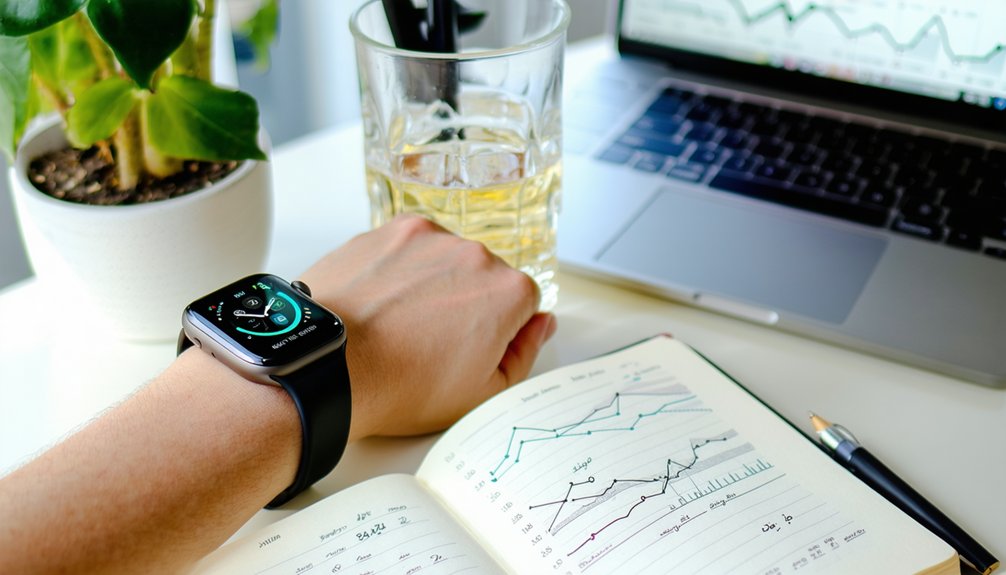

Wearable devices capture continuous streams of physiological and activity data, including heart‑rate variability, SpO2, step counts, sleep stages, and emerging glucose or breath metrics. Sensors such as optical PPG, accelerometers, and ballistocardiograms generate high‑resolution time series that are filtered for motion artifacts and calibrated against reference measurements. By aggregating these streams, algorithms create longitudinal trends, detect deviations, and produce device‑agnostic health scores. This enables early disease detection, personalized fitness guidance, and proactive clinical alerts. The next sections reveal how these insights translate into real‑world outcomes.
Key Takeaways
- Multi‑sensor fusion (PPG, SpO₂, accelerometer, ECG, BCG) continuously captures physiological signals, enabling trend analysis of heart rate, oxygen saturation, activity, and sleep.
- Context‑aware algorithms filter motion artifacts and apply activity‑type correction factors, preserving data accuracy across daily routines.
- Periodic calibration and personalized baselines (14‑21 day statistical windows) ensure long‑term reliability of cuffless blood‑pressure and glucose measurements.
- Cloud‑based aggregation combines normalized step totals, intensity zones, HRV, and sleep metrics into device‑agnostic health scores for preventive insights.
- Real‑time remote monitoring and AI‑driven alerts translate longitudinal trends into clinical actions, reducing readmissions and supporting chronic disease management.
What Health Metrics Do Wearables Track and Why They Matter
Through a blend of optical sensors, accelerometers, and specialized algorithms, wearables continuously capture a suite of health metrics that together form a holistic picture of physiological status. They record resting heart rate and exercise‑induced fluctuations, then compute resting variability to flag autonomic imbalance and long‑term disease risk. Continuous oxygen monitoring, often via SpO2 sensors or ring‑shaped devices, reveals respiratory trends and early hypoxic events. Integrated accelerometry counts steps, gauges distance, and estimates calories, while motion analysis detects gait changes and fall risk. Sleep modules log duration, temperature shifts, and nocturnal heart patterns, delivering actionable insights for recovery. By aggregating these data streams, wearables empower users to belong to a community of informed participants, fostering shared commitment to preventive health. The OPURA RING provides in‑depth sleep stage analysis that enhances recovery insights. Wearables also enable remote patient monitoring by transmitting real‑time data to clinicians for early intervention. Adding a wearable can add roughly 1,300 steps per day, translating to nearly an extra hour of moderate‑to‑vigorous activity each week step increase.
Device Overview: Fitness Trackers, Smartwatches, and ECG Patches
The market for wearable health technology is divided into three primary categories—fitness trackers, smartwatches, and ECG patches—each optimized for distinct use cases and form factors. Fitness trackers, exemplified by Fitbit, focus on step counts, activity reminders, and zone‑based heart‑rate monitoring, leveraging wrist‑band or clip‑on form factors that prioritize battery longevity for all‑day wear. Smartwatches such as Apple Watch and Garmin models extend capabilities to HRV, pulse oximetry, and body‑battery scores, delivering real‑time insights while syncing automatically with smartphones; their robust batteries support weeks of continuous tracking. ECG patches, though less detailed in the source, complement these devices by offering dedicated cardiac monitoring, often in discreet, adhesive form factors designed for prolonged wear without compromising battery life. Together, they create a cohesive ecosystem that encourages users to adopt health‑focused habits within a supportive community. Mindfulness tools are also integrated into many devices, providing quick meditation or breathing sessions to help manage stress. Regular use of these devices can provide long‑term trend data that helps users and gradual changes in fitness and heart health. The Vivoactive 5 offers strong value with reliable heart‑rate and distance tracking, making it a versatile choice for most users.
Wearable Health Metrics: Interpreting Heart‑Rate & Blood‑Pressure Trends
From the perspective of a data‑driven health analyst, interpreting wearable heart‑rate and blood‑pressure trends requires understanding both the physiological signal captured and the technological constraints of the device.
PPG‑based sensors deliver sub‑2 bpm error at rest, yet motion‑induced artifact filtering becomes essential during typing or vigorous arm movement, where readings can be over‑ or underestimated.
Consistent calibration schedules mitigate sensor drift, especially for cuffless blood‑pressure estimators whose accuracy is highly contingent on arm position and recent arm‑cuff reference.
Context tagging of activity type—rest, walking, running—enables algorithms to apply appropriate correction factors, preserving trend fidelity across diverse daily patterns.
Ballistocardiogram provides additional cardiac timing information that can improve arrhythmia detection when combined with PPG data.
Periodic recalibration is required to maintain accuracy in cuffless blood‑pressure devices.Chest‑band devices offer the most reliable electrical measurements, especially during high‑intensity exercise.
Detecting Stress and Illness From Sleep‑Quality Data
Detecting stress and illness through sleep‑quality data leverages wearable‑derived metrics such as total sleep time, wake after sleep onset, and heart‑rate variability to infer physiological dysregulation. Researchers have shown that HRV trends correlate with perceived stress, enabling stress prediction models that achieve high compliance in collegiate cohorts.
By classifying sleep stage with moderate accuracy—particularly light and REM sleep—wearables generate longitudinal profiles that flag deviations suggestive of illness detection. Advanced algorithms integrate breathing, temperature, and movement signals to compensate for wrist‑device limitations, improving identification of sleep apnea and other disorders.
Continuous monitoring hence offers a community‑wide feedback loop, where individuals recognize shared patterns, fostering collective awareness of health trajectories without sacrificing precision. The lack of raw sensor data limits independent validation of these algorithms.
Convert Steps and Activity Intensity Into Health Scores
By integrating step counts and activity‑intensity classifications into a unified scoring framework, researchers can translate raw movement data into actionable health metrics.
The process begins with activity conversion that maps vendor‑specific intensity labels to a standardized schema, enabling intensity scaling across Garmin, Oura, and Whoop devices.
A statistical calibration window of 14‑21 days establishes a personal baseline, applying time‑aware weighting to prioritize recent activity while handling gaps and outliers.
Machine‑learning models then combine normalized step totals, intensity‑scaled zones, and complementary signals such as HRV and sleep metrics.
Resulting health scores reflect cumulative cardiovascular load, muscular strain, and recovery readiness, presenting users with a clear, device‑agnostic indicator of long‑term well‑being.
Real‑World Success Stories: How Long‑Term Monitoring Changed Lives
Across diverse populations, long‑term wearable monitoring has repeatedly demonstrated tangible health benefits, translating continuous sensor data into actionable clinical insights that improve independence, reduce hospital readmissions, and enhance quality of life.
Community storytelling illustrates older adults who, through remote heart‑rate and activity tracking, maintain daily routines without frequent clinic visits, fostering lifestyle transformations that preserve autonomy.
In Vietnam, pulse‑oximeter data enabled clinicians to intervene early for COVID‑19 patients, cutting readmissions and reinforcing communal confidence in home care.
Oncology narratives describe chemotherapy recipients whose symptom dashboards prompted timely medication adjustments, resulting in higher adherence and shared hope.
Chronic‑disease cohorts benefit from AI‑driven alerts on gait and variability, prompting preventive medication changes and collective empowerment across health networks.
How to Beat Cost, Privacy, and Adoption Barriers for High‑Risk Users
Amid mounting evidence that wearables can curb hospital readmissions and empower chronic‑disease management, the primary obstacle for high‑risk populations remains the convergence of cost, privacy, and adoption hurdles.
Experts recommend subsidized distribution through public insurers and employer health plans, turning $300‑$600 devices into no‑cost benefits for qualifying patients.
Parallelly, rigorous privacy audits must be institutionalized, documenting data handling, storage, and sharing protocols to reassure users whose trust hinges on confidentiality.
Targeted digital‑literacy programs teach older adults and low‑income groups how to operate devices, interpret alerts, and navigate apps, while refurbished units with warranties lower financial entry barriers.
Future Wearable Health Metrics: Glucose, Breathwork, and Emerging Tech
Cost, privacy, and adoption hurdles have been addressed, the next frontier is the expansion of wearable health metrics beyond traditional critical signs.
In 2026, continuous glucose monitors now last a year, integrate with automated insulin delivery, and receive FDA endorsement for early‑onset use, while over‑the‑counter models broaden accessibility.
Simultaneously, breath glucose devices such as PreEvnt Isaac capture volatile compounds, pair with smartphones, and alert contacts, positioning non‑invasive monitoring as a complement to medical meters.
Emerging optical platforms from Sensura and ear‑mounted EEG patches from SynchNeuro translate metabolic shifts into actionable data, with EEG trends offering early warnings for pre‑diabetes.
Collectively, these innovations promise seamless, community‑driven health stewardship, reinforcing a shared commitment to preventive wellness.
References
- https://www.nhlbi.nih.gov/news/2023/study-reveals-wearable-device-trends-among-us-adults
- https://news.cuanschutz.edu/medicine/wearable-fitness-tracker-health-data
- https://www.ncbiotech.org/sites/default/files/2025-01/NCBiotech_FitnessTrackers_SampleReport2024.pdf
- https://www.jmir.org/2025/1/e56251/
- https://www.ucsf.edu/news/2025/06/430166/your-fitness-tracker-could-help-doctors-spot-health-risks-early
- https://leger360.com/en/market-intelligence-wear-your-health-the-rise-in-popularity-of-wearable-tech/
- https://pmc.ncbi.nlm.nih.gov/articles/PMC8826148/
- https://www.statista.com/topics/1556/wearable-technology/
- https://www.massgeneral.org/news/article/personal-wearable-health-devices
- https://pmc.ncbi.nlm.nih.gov/articles/PMC9330198/